_edited.jpg)
How Much Trust Can a System Lose Before People Stop Participating?

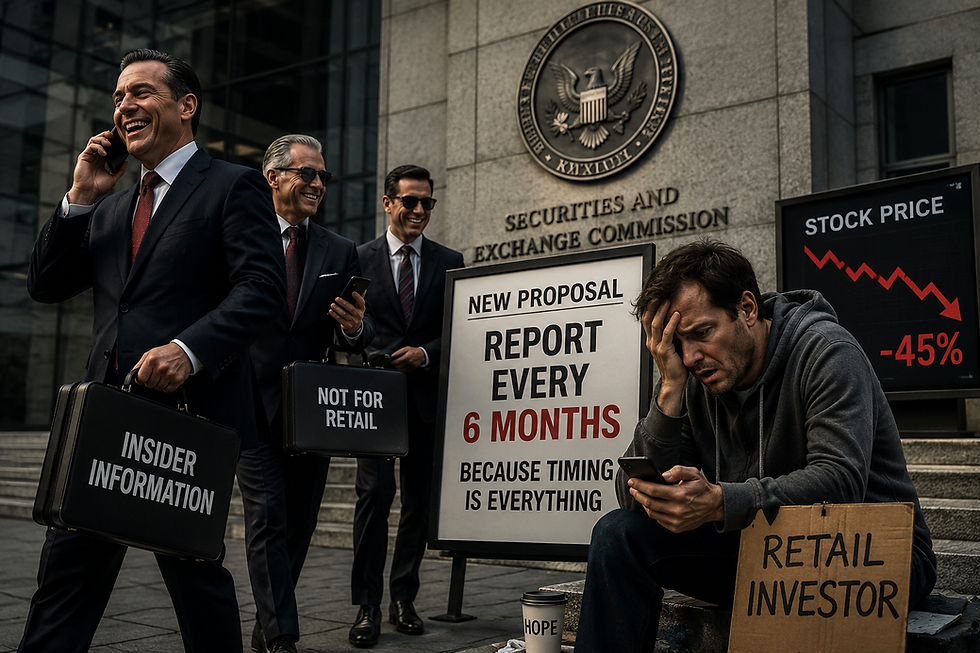
WASHINGTON, D.C. — In a stunning gift to corporate America, the Securities and Exchange Commission has proposed letting public companies report earnings every six months instead of quarterly, because nothing says “investor protection” like giving executives half a year to hide the bodies. The rule, S7-2026-15, has been warmly embraced by CEOs who believe shareholders have been “over-informed” for far too long.
“This isn’t about hiding problems,” said one beaming CFO while quietly dumping shares. “It’s about giving management the time and space to creatively problem-solve before retail investors start panicking and doing something crazy — like selling.”
How Retail Investors Can Get Absolutely Screwed
Under the new plan, retail investors — the lovable little guys trading from their phones between bathroom breaks — will enjoy a luxurious six-month vacation from reality: Bad news gets to age like fine wine. By the time you finally hear about the massive write-down, missed guidance, or that the CEO’s brother-in-law was running the supply chain, the stock will already be down 45% in a single morning.
Surprise!
Insiders get a six-month head start.
The information gap gets a six-month runway. While you’re happily buying dips based on last quarter’s hype, executives, major investors, lenders, suppliers, and other market participants may have a much clearer picture of what’s happening inside the company. Retail investors get the memo when the market decides to send the invoice, right around the time your portfolio looks like it got hit by a truck.
Volatility goes nuclear. Instead of four manageable ear-slaps per year, you now get two massive financial atomic bombs. Think “earnings surprise,” but make it a horror movie.
Wall Street analysts were thrilled. “Why rush the bad news?” asked one hedge fund bro. “Let the problem mature. Let it develop depth. Six months gives the company time to pivot… or at least time to blame AI, tariffs, and climate change in a really compelling way.”
Retail investors reacted with their signature blend of outrage and hopium: “This is financial gaslighting!” tweeted one man who bought GME at $380 because his barber said it was going to the moon.
The Real Danger
The SEC insists insider trading remains illegal. Critics say that's not the point. The point is that a six-month reporting window increases the amount of time that important information can remain known to a relatively small group of people while remaining unknown to everyone else. Most executives will follow the rules. Most companies will act responsibly.
But public markets don't run on trust in "most." They run on confidence that everyone is playing by the same rules and seeing the same information. The danger isn’t necessarily fraud.
The danger is perception.
If retail investors begin to believe that bad news can sit inside a company for six months while insiders, lenders, vendors, institutional investors, and connected market participants have a better understanding of what’s happening, confidence in the fairness of the market begins to erode.
And once investors lose faith in the system, they don’t just stop trusting management. They stop trusting the market itself.
The SEC calls the proposal a reduction in reporting burden.
Critics call it an experiment in how much transparency investors are willing to lose before they decide the game is rigged.
At press time, corporate boards across the country were holding emergency meetings titled “How SCREWED Are We?” while retail traders on Reddit updated their new cope:
“Just hold longer, bro.”
Stay informed, kings. Or don’t. They clearly prefer it that way.
But I would consider downsizing your retail trading positions before this rule takes effect. I hear lemonade stands are coming back in style...
Editor’s Note: Satire works best when it exaggerates reality. In this case, reality has done much of the work itself. While the facts behind this story are real, the larger concern is the direction they represent: a system where economic benefits increasingly flow upward while the burdens are distributed downward. The question is not just who wins today, but whether the system remains sustainable when fewer people feel they have a stake in it. This clearly feels like a way to destabilize global markets as the world invests in our stock markets. God help us.



Comments