_edited.jpg)
China Raids Peaceful Christian Worship Service, Detains Church Elders
- Steve

- 2 days ago
- 3 min read
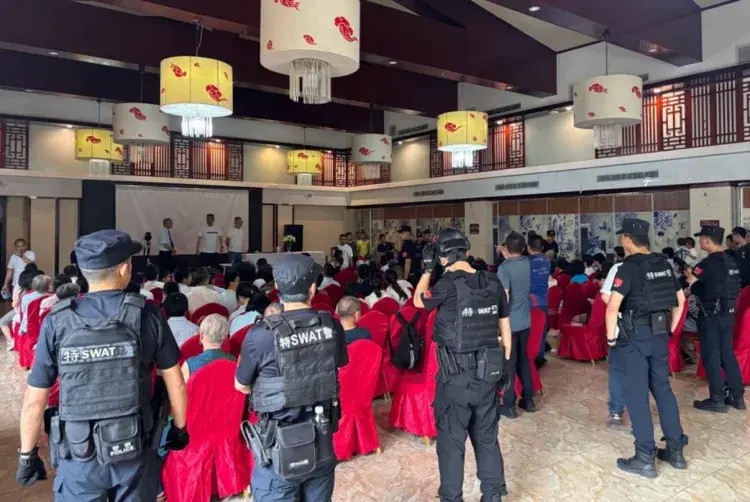
In a stark display of religious control, Chinese authorities disrupted a Sunday worship service of the Early Rain Covenant Church in Jiangyou, Sichuan Province, on June 14, 2026. Dozens of police officers interrupted the gathering—held about 100 miles north of Chengdu—surrounding congregants, including young children, as they sang hymns in quiet defiance. Thirty-one people were taken to a detention center for questioning. Most were released by late evening, but two senior elders, Yan Hong and Wu Wuqing, remain in custody.Videos shared on the church’s Telegram channel captured officers berating the worshippers during the raid. Officials reportedly pressured those detained to sign statements without first disclosing their content, a tactic many refused.
What China Is Doing
These believers were not protesting, organizing politically, or causing public disturbance. They were quietly practicing their faith in a private setting—an unregistered “house church” gathering. Yet Chinese authorities treat such independent worship as illegal. Christianity itself is not banned in China (roughly 1-2% of adults identify as Christian per national surveys), but public worship is only permitted in state-sanctioned churches that register with the government and submit to official oversight. This includes restrictions on teaching, publishing, online activity, and doctrine. Unregistered groups face repeated raids, surveillance, and pressure to join the official system or disband. The Chinese government demands “Sinicization” of religion—forcing churches to adapt their beliefs and practices to align with Communist Party ideology and loyalty to the state above all else. Early Rain Covenant Church, a Presbyterian congregation, has long refused this, insisting on the independence of Christian conscience. Its founding pastor, Wang Yi, was sentenced to nine years in prison in 2018 on charges of “inciting subversion of state power” after a major crackdown.This latest raid is part of a broader, intensifying pattern targeting unregistered house churches across China, including actions against networks like Zion Church.
Official Response
China’s Foreign Ministry defended the actions, stating that the government “manages religious affairs in accordance with the law and protects people’s freedom of religious belief and normal religious activities.” Spokesperson Lin Jian rejected international criticism as “interference in China’s internal affairs.”
How Does Peaceful Faith Practice Harm the CCP?
It doesn’t. A small group of families and elders singing hymns in a hotel conference room or private space poses no credible threat to China’s national security, economic power, or social stability. The CCP’s determination to crush even quiet, non-political religious activity reveals deeper insecurity: an unwillingness to tolerate any source of authority—spiritual or moral—that exists outside direct Party control.
By treating peaceful believers as subversives, the regime:
Undermines its own claims of “harmony,” “rule of law,” and protecting freedoms.
Alienates law-abiding citizens who might otherwise contribute positively to society.
Projects an image of paranoia and authoritarian overreach internationally, damaging soft power.
Risks creating resentment and underground networks that are harder to monitor than open, regulated ones.
History shows that heavy-handed repression of religion often fails to eliminate faith and can strengthen the resolve of believers. For a ruling party that prioritizes total ideological dominance, even quiet Christianity represents an alternative loyalty that cannot be fully co-opted. The result is a self-inflicted wound: unnecessary confrontation with its own people over something as fundamental as personal belief. Early Rain Covenant Church has become a symbol of this tension. As long as Beijing equates unregistered worship with subversion, such raids will likely continue—regardless of how quietly or peacefully the congregations try to meet.


Comments